


The show left Corsica at the end of June.
The house is still there.
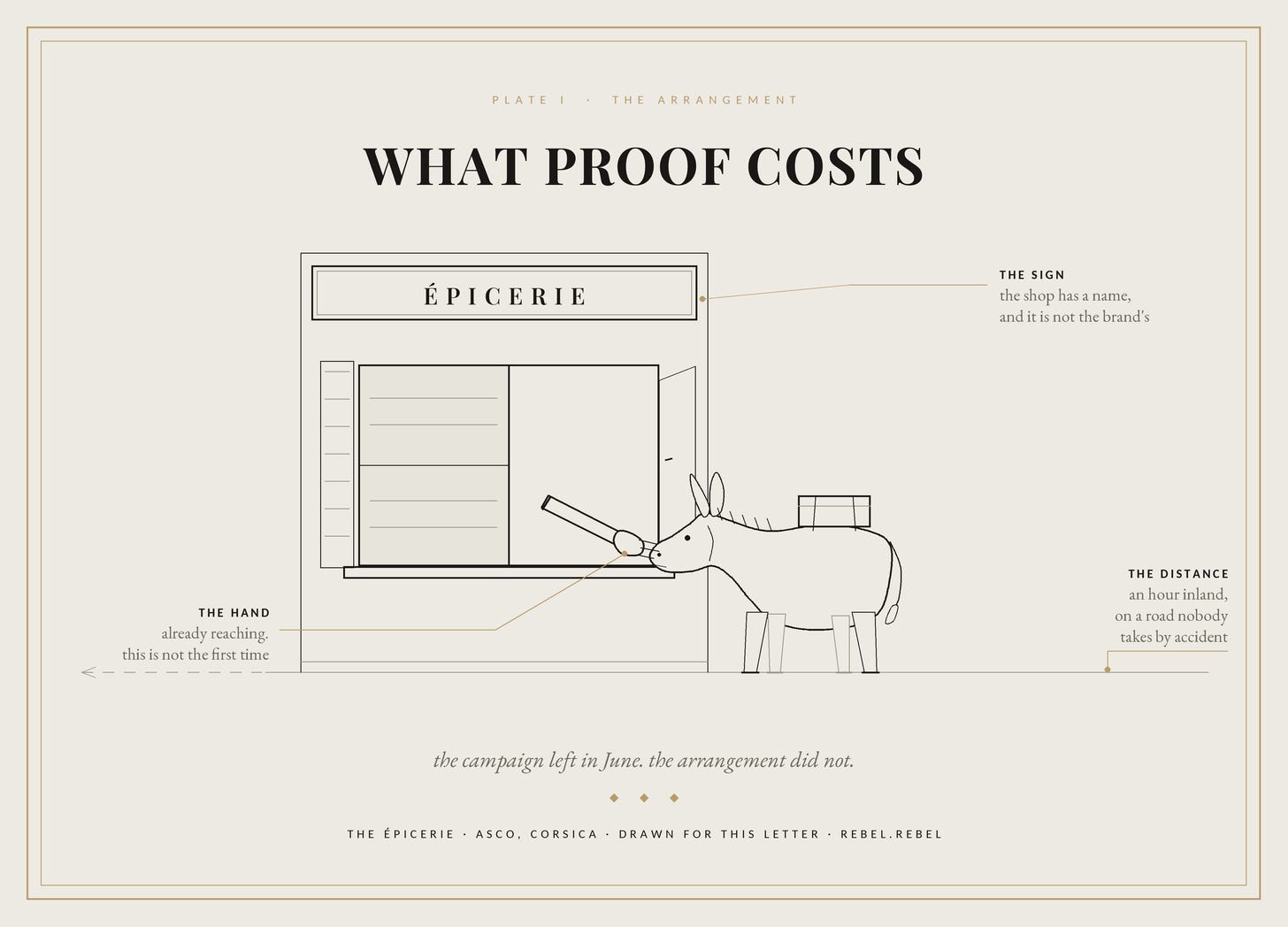
An hour inland, in Asco, its account posted a donkey at the window of the village épicerie.
No collection. No model. No runway. A grocery window, a donkey, the shopkeeper’s hand, and one word:
Coucou.
It may be the most valuable image in the entire campaign.
Not because it sells a product directly, but because it quietly changes what the product means.
For the customer who already bought the collection, it validates the purchase. The clothes weren’t inspired by a place. They emerged from one.
For the customer considering the collection, it lowers the risk of trusting the story. This wasn’t a location scout. It was a relationship.
For someone discovering Jacquemus for the first time, it establishes something more valuable than taste.
It establishes belonging.
Most luxury campaigns arrive, extract a visual language, and leave. The trucks pack up. The location becomes an asset. The story ends when production wraps.
Weeks after the trucks left, the house was still at the épicerie.
The campaign was temporary.
The attention wasn’t.
Customers may never consciously articulate the distinction, but they instinctively understand the difference between a brand that visited and an author who returned.
Most people will mistake this for vibes.
They are looking at the donkey.
The customer is looking at the relationship.
That is what made the shirt more desirable.
Not the donkey.
The month.
People call this authenticity.
I don’t think that’s the right word.
It’s provenance.
I spent years inside two of the biggest sports brands in the world, costing out campaigns.
The donkey cost almost nothing.
That isn’t a detail.
The most expensive thing in marketing is proof.
The only brands that get it for free are the ones that were already going to be there.
Austin Ripmaster. Nike. adidas. Six years in-house at Lucchese.